
Fatty liver disease affects approximately one in three Australian adults.
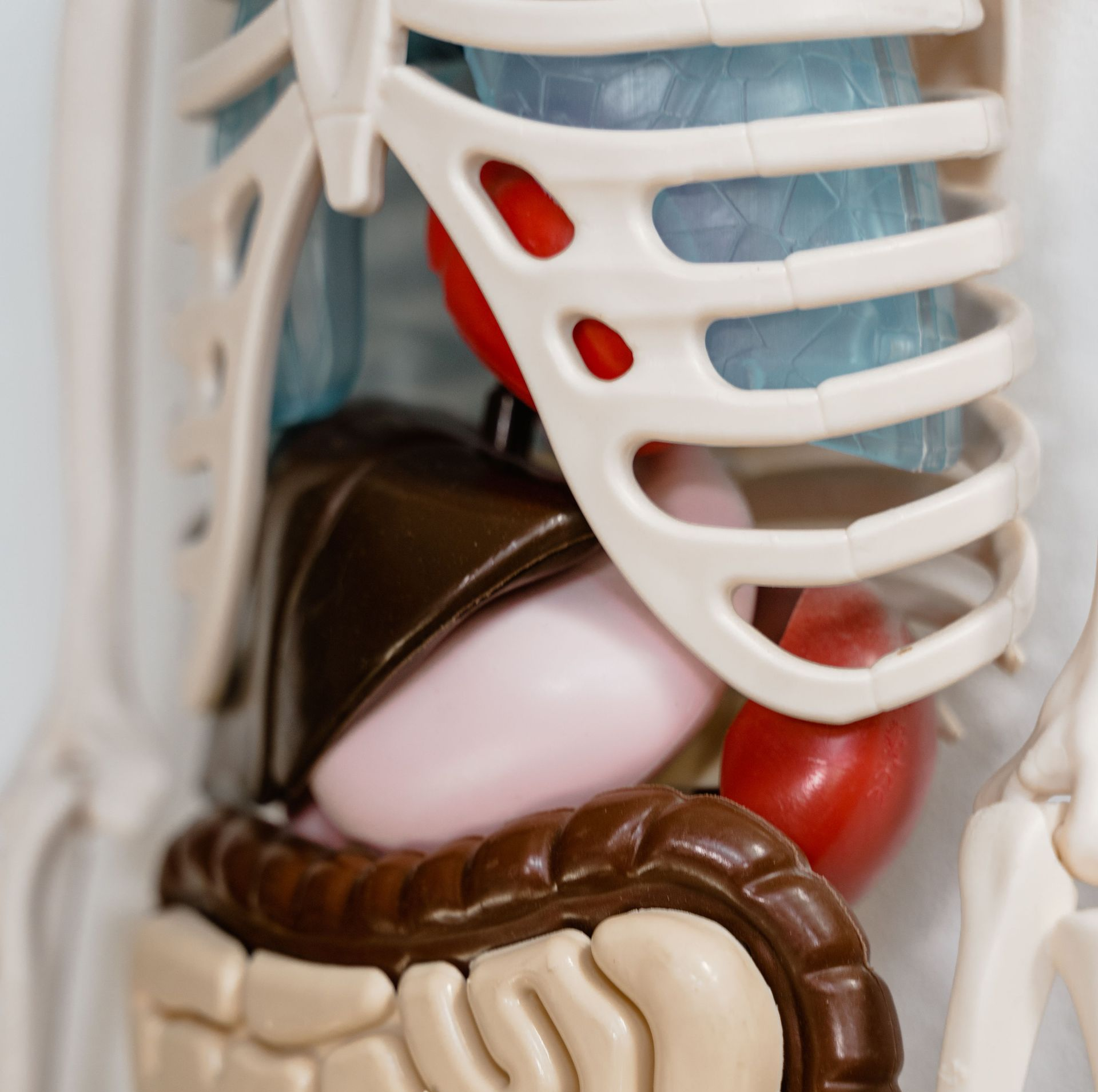
It's surprisingly common, often develops without noticeable symptoms, and is closely connected to how our bodies process and store energy.
Despite its name, fatty liver disease isn't necessarily caused by eating too much fat. It's a metabolic condition influenced by several factors, including insulin resistance, blood sugar regulation, cholesterol, physical activity and, in some cases, alcohol consumption.
So what exactly happens when fat builds up in the liver? Can it be reversed? And why are researchers investigating Chinese herbal medicine as a potential complementary approach?
Let's start with the basics.
What is fatty liver disease?
Your liver is one of the busiest organs in your body. Among its many responsibilities, it helps process nutrients, regulate blood sugar, manage fats, produce bile and break down substances such as medications and alcohol.
It's perfectly normal for the liver to contain a small amount of fat.
However, when excess fat accumulates inside liver cells, it can develop into a condition known as fatty liver disease, or hepatic steatosis.
The most common type is now called metabolic dysfunction-associated steatotic liver disease (MASLD). You may have previously heard it referred to as non-alcoholic fatty liver disease (NAFLD). Some Australian clinical resources also use the term MAFLD, which has slightly different diagnostic criteria.
Although the terminology has evolved, the central concern remains the same: excessive fat accumulation in the liver associated with metabolic health.
Who develops fatty liver disease?
Fatty liver disease can affect adults of different ages and body sizes.
It's particularly common among people with:
- Insulin resistance or type 2 diabetes
- Higher levels of abdominal body fat
- Elevated triglycerides or cholesterol
- High blood pressure
- Low levels of physical activity
- Certain hormonal or metabolic conditions, including polycystic ovary syndrome (PCOS)
Importantly, you don't have to be overweight to develop fatty liver disease.
People within a healthy weight range can also experience metabolic dysfunction and fat accumulation in the liver.
Alcohol can contribute to fatty liver disease too, although alcohol-related liver disease and MASLD are classified differently. Some people have overlapping metabolic and alcohol-related risk factors.
- Insulin resistance or type 2 diabetes
How does fat actually build up in the liver?
To understand fatty liver disease, it helps to understand insulin.
Insulin is a hormone that helps move glucose (sugar) from the bloodstream into cells, where it can be used for energy.
When someone develops insulin resistance, their cells respond less effectively to insulin. The body may compensate by producing more of it, while changes in fat metabolism increase the amount of fatty acids reaching the liver.
The liver also produces some fat of its own.
When more fat enters or is produced by the liver than can be used or exported, it begins to accumulate.
Over time, this can contribute to inflammation and, in some people, scarring of liver tissue.
This is why fatty liver disease is increasingly understood as part of a broader picture of metabolic health, rather than simply a problem with one organ.
What are the symptoms?
Here's what makes fatty liver disease particularly tricky.
Most people have no obvious symptoms at all.
It's often discovered during routine blood tests or an abdominal ultrasound performed for another reason.
When symptoms do occur, they may include persistent fatigue, a general feeling of being unwell or discomfort in the upper-right abdomen.
These symptoms are not specific to fatty liver disease, and many other conditions can cause them.
While many people with fatty liver never develop serious liver damage, a proportion develop inflammation and scarring, known as fibrosis. Advanced scarring can eventually progress to cirrhosis.
Fatty liver disease is also associated with an increased risk of cardiovascular disease, making the broader metabolic picture particularly important.
How is fatty liver disease diagnosed?
Your GP may investigate fatty liver disease if you have metabolic risk factors, abnormal liver blood tests or an unexpected finding on a scan.
Assessment may involve:
- Blood tests: Including liver enzymes such as ALT, AST and GGT, alongside blood glucose, HbA1c and cholesterol levels.
- Ultrasound: To look for fat accumulation in the liver.
- Fibrosis assessment: Using tools such as the FIB-4 score, calculated from blood results, or a specialised scan called FibroScan to assess the likelihood of liver scarring.
An important distinction is that liver enzymes are not a direct measurement of liver function or the amount of scarring present. Someone can have fatty liver disease even when their liver enzyme levels are within the laboratory reference range.
A medical assessment helps establish whether fatty liver is present, how advanced it may be and whether other causes of liver disease need to be investigated.
- Blood tests: Including liver enzymes such as ALT, AST and GGT, alongside blood glucose, HbA1c and cholesterol levels.
Can fatty liver disease be reversed?
In many cases, particularly when identified early, fat accumulation in the liver can improve significantly.
Treatment focuses on improving metabolic health and reducing the factors contributing to liver fat accumulation.
This commonly includes regular physical activity, improving dietary quality, reducing excess alcohol consumption and managing blood sugar, blood pressure and cholesterol.
For people living with overweight or obesity, sustained weight loss can make a meaningful difference. Clinical guidelines suggest that losing around 5% of body weight may reduce liver fat, while greater reductions may help improve inflammation and, in some cases, fibrosis.
Importantly, improvements in diet quality and exercise can benefit liver and metabolic health even without significant weight loss.
Medical monitoring remains important, particularly for people with type 2 diabetes, advanced fibrosis or other risk factors.
How does Chinese Medicine understand fatty liver disease?
Chinese Medicine approaches health through a different diagnostic framework.
Rather than identifying disease solely through organ structure or laboratory results, practitioners consider patterns involving digestion, metabolism, circulation, symptoms, and overall physiological function.
One important distinction is that in Chinese Medicine, the Liver and Spleen are functional systems, not direct equivalents of the anatomical organs. For example, the Spleen system is traditionally associated with transforming food and fluids into usable nourishment and transporting these throughout the body. The Liver system is associated with the smooth regulation of Qi and the movement of Blood. Neither concept should be interpreted as a literal description of how liver cells accumulate fat. Instead, they provide a traditional framework for understanding patterns of symptoms and bodily function.
Common Chinese Medicine patterns:
In traditional Chinese Medicine literature, metabolic fatty liver disease is frequently discussed in relation to several overlapping patterns.
Spleen Qi deficiency with Dampness or Phlegm accumulation
This pattern describes impaired transformation and transportation of fluids and nourishment. It may be associated with symptoms such as fatigue, heaviness, bloating, loose stools or a sense of sluggish digestion.
Liver Qi stagnation
Traditionally associated with disrupted regulation and movement of Qi, this pattern may involve abdominal distension, digestive discomfort or symptoms that fluctuate with emotional stress.
Damp-Heat
This describes a pattern involving Dampness alongside signs traditionally interpreted as Heat, which may include digestive discomfort, a bitter taste, heaviness or particular tongue and pulse findings.
Blood Stasis
This pattern concerns impaired circulation within the Chinese Medicine framework and may be considered in presentations involving persistent or longstanding symptoms.
These patterns aren't interchangeable with biomedical diagnoses such as insulin resistance, inflammation or liver fibrosis. They are different systems of assessment.
A person with medically diagnosed fatty liver disease might present with one pattern, several overlapping patterns or very few noticeable symptoms.
This is one reason Chinese Medicine traditionally emphasises individualised assessment rather than prescribing the same formula to everyone with the same diagnosis.
WHERE DOES HERBAL MEDICINE FIT IN?
Chinese herbal medicine has a long history of using combinations of medicinal substances, with formulas selected according to an individual's presentation.
Rather than relying on a single herb for a single symptom, traditional formulations consider how different herbs work together, their intended actions, and how the combination may be adjusted.
In modern research, scientists are investigating whether some of these formulations influence measurable aspects of metabolic health. These include liver enzymes, blood lipids, insulin resistance and liver fat accumulation.
It's an interesting area of investigation because it brings traditional prescribing practices into a setting where outcomes can be assessed using contemporary clinical measurements.

What does the latest research say?
In June 2026, researchers published a systematic review in the Journal of Evidence-Based Medicine examining Chinese herbal medicine for metabolic dysfunction-associated steatotic liver disease.
The review included 56 randomised controlled trials investigating Chinese Medicine formulations compared with placebo or usual care.
Across the studies, the researchers reported favourable results for several measures, including:
- Liver enzymes, including ALT, AST and GGT
- Blood lipids, including triglycerides, total cholesterol and LDL cholesterol
- Measures of liver fat accumulation
- Body mass index (BMI)
- Certain symptom scores used in Chinese Medicine research
There was no significant improvement reported for HDL cholesterol.
These findings suggest that Chinese herbal formulations may influence some measurable markers associated with metabolic liver health.
However, improvements in blood tests or liver fat measurements do not automatically establish that a treatment prevents cirrhosis, reduces future liver complications or produces meaningful long-term health benefits.
WHERE DOES HERBAL MEDICINE FIT IN?
Chinese herbal medicine has a long history of using combinations of medicinal substances, with formulas selected according to an individual's presentation.
Rather than relying on a single herb for a single symptom, traditional formulations consider how different herbs work together, their intended actions, and how the combination may be adjusted.
In modern research, scientists are investigating whether some of these formulations influence measurable aspects of metabolic health. These include liver enzymes, blood lipids, insulin resistance and liver fat accumulation.
It's an interesting area of investigation because it brings traditional prescribing practices into a setting where outcomes can be assessed using contemporary clinical measurements.
What does the latest research say?
In June 2026, researchers published a systematic review in the Journal of Evidence-Based Medicine examining Chinese herbal medicine for metabolic dysfunction-associated steatotic liver disease.
The review included 56 randomised controlled trials investigating Chinese Medicine formulations compared with placebo or usual care.
Across the studies, the researchers reported favourable results for several measures, including:
- Liver enzymes, including ALT, AST and GGT
- Blood lipids, including triglycerides, total cholesterol and LDL cholesterol
- Measures of liver fat accumulation
- Body mass index (BMI)
- Certain symptom scores used in Chinese Medicine research
There was no significant improvement reported for HDL cholesterol.
These findings suggest that Chinese herbal formulations may influence some measurable markers associated with metabolic liver health.
However, improvements in blood tests or liver fat measurements do not automatically establish that a treatment prevents cirrhosis, reduces future liver complications or produces meaningful long-term health benefits.
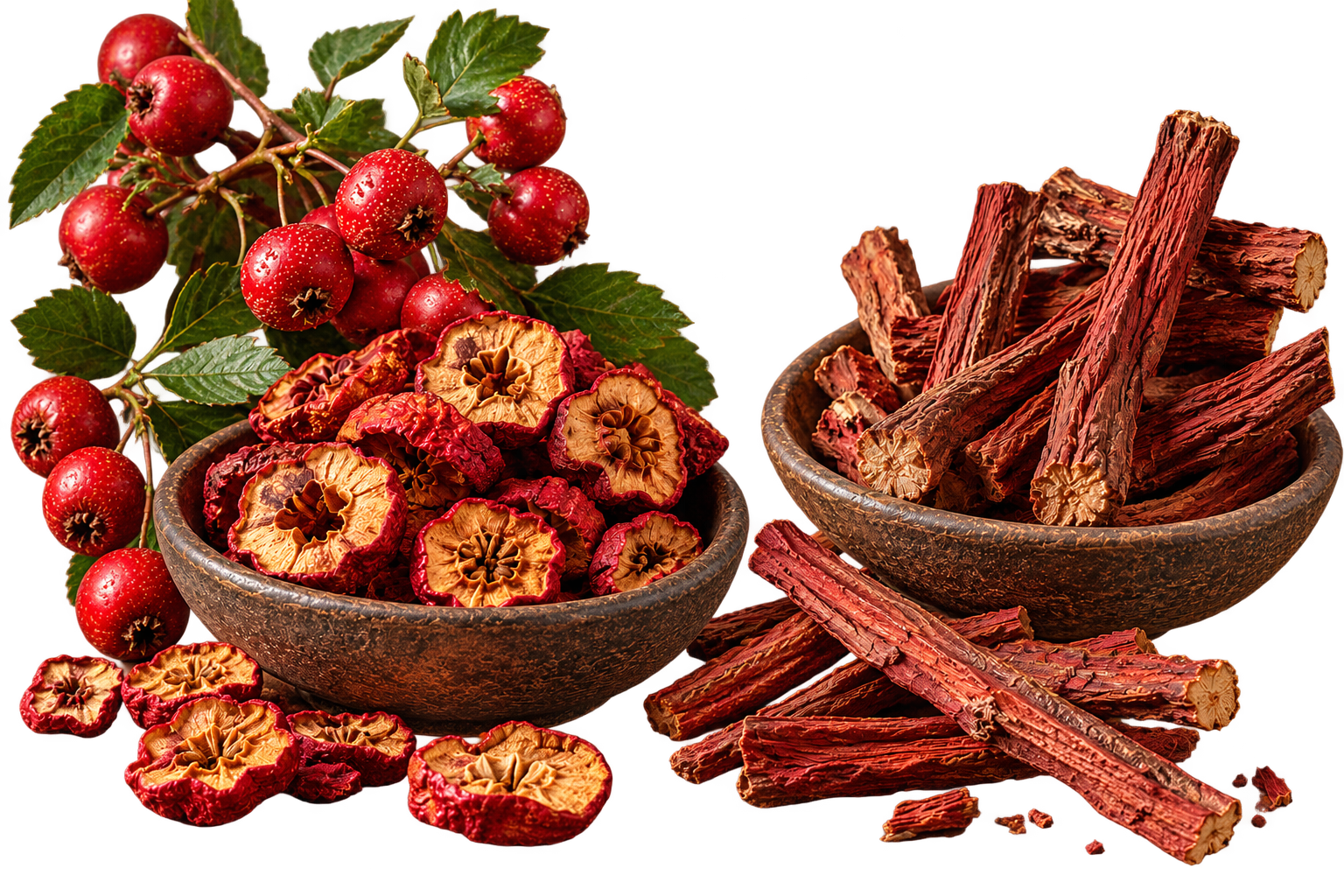
Two herbs appeared repeatedly across the research
The researchers also examined which herbs were commonly used together across the included studies. Their analysis of 39 studies identified 78 herbs, with two featuring prominently in the core formulation patterns.
Shan Zha (Crataegus pinnatifida)
Also known as hawthorn fruit, Shan Zha is traditionally classified as a herb that reduces food stagnation, particularly involving rich or greasy foods.
Dan Shen (Salvia miltiorrhiza)
Also known as red sage root, Dan Shen is traditionally used in formulas associated with invigorating Blood and addressing Blood Stasis.
These traditional classifications help explain why the herbs may appear in particular formula combinations.
How reliable are the results?
This is where the research needs to be interpreted carefully. Despite encouraging results across several outcomes, the authors rated the overall certainty of evidence as very low.
Many included trials had methodological weaknesses, particularly relating to randomisation procedures, allocation concealment and blinding. Differences between formulas and study designs also make it difficult to draw firm conclusions about which treatments may be beneficial, for whom and over what period.
The researchers reported relatively few adverse events in the included studies, mainly gastrointestinal discomfort. However, inconsistent safety reporting and limitations in study quality mean these findings cannot establish the long-term safety of herbal treatment.
So, while this review provides useful directions for future research, it does not establish Chinese herbal medicine as a proven treatment for fatty liver disease. Larger, well-designed clinical trials are needed to determine whether the reported improvements are reliable, clinically meaningful and sustained.
A note about herbal medicine and liver safety
The liver processes many medicinal substances therefore, herbal prescribing requires particular care when liver disease is present. Herbal medicines contain biologically active compounds. Some may interact with prescription medications, while others can cause adverse reactions, including liver injury. For example, Dan Shen has documented interactions with the anticoagulant warfarin.
Anyone with an existing liver condition should discuss herbal medicines and supplements with their treating doctor and a suitably qualified Chinese herbal medicine practitioner before taking them.
Bringing the two perspectives together
Fatty liver disease offers an interesting example of how traditional and contemporary healthcare frameworks can explore overlapping areas of health while approaching them differently. Modern medicine helps identify liver fat accumulation, assess fibrosis risk and address metabolic conditions such as diabetes, hypertension and abnormal blood lipids. Chinese Medicine considers the individual's broader presentation through its traditional diagnostic framework, while contemporary research investigates whether specific herbal formulations produce measurable clinical effects.
The emerging research is interesting, particularly in relation to metabolic health. At the same time, the current evidence remains too uncertain to support definitive claims about Chinese herbal medicine treating fatty liver disease.
For people interested in Chinese Medicine alongside their existing healthcare, a consultation provides an opportunity to discuss their health history, current medications and whether herbal medicine is appropriate for their circumstances.
Reference:
- Healthdirect Australia. Fatty liver: symptoms, causes and treatment. https://www.healthdirect.gov.au/conditions/liver-and-pancreas-diseases/fatty-liver
- O'Halloran, R., Adams, L. A., Deed, G., & Lubel, J. S. (2026). Metabolic dysfunction-associated fatty liver disease: An update. Australian Prescriber, 49, 44–49. https://doi.org/10.18773/austprescr.2026.014
- European Association for the Study of the Liver, European Association for the Study of Diabetes, & European Association for the Study of Obesity. (2024). EASL–EASD–EASO Clinical Practice Guidelines on the management of metabolic dysfunction-associated steatotic liver disease (MASLD). Journal of Hepatology, 81(3), 492–542. https://doi.org/10.1016/j.jhep.2024.04.031
- Wei, Z., Guo, L., Zhang, G., Qian, Y., Lan, Z., & Yang, K. (2026). Traditional Chinese Medicines for Metabolic Dysfunction-Associated Steatotic Liver Disease: A Mixed-Method Systematic Review. Journal of Evidence-Based Medicine, 19(2), e70149. https://doi.org/10.1111/jebm.70149
- Integrated traditional Chinese and Western medicine in the prevention and treatment of non-alcoholic fatty liver disease: Future directions and strategies. (2024). Chinese Medicine. https://doi.org/10.1186/s13020-024-00894-1
- Australian Prescriber. Interactions between complementary medicines and warfarin. https://australianprescriber.tg.org.au/articles/interactions-between-complementary-medicines-and-warfarin.html
Book Your Appointment Online
Ready to dive in?
Scheduling your session at Pack Health is easy and convenient. Our online booking system allows you to choose a time and date that fits your schedule.
Book in now and let us take care of the rest!